The Hidden Danger: When Data Becomes a Liability
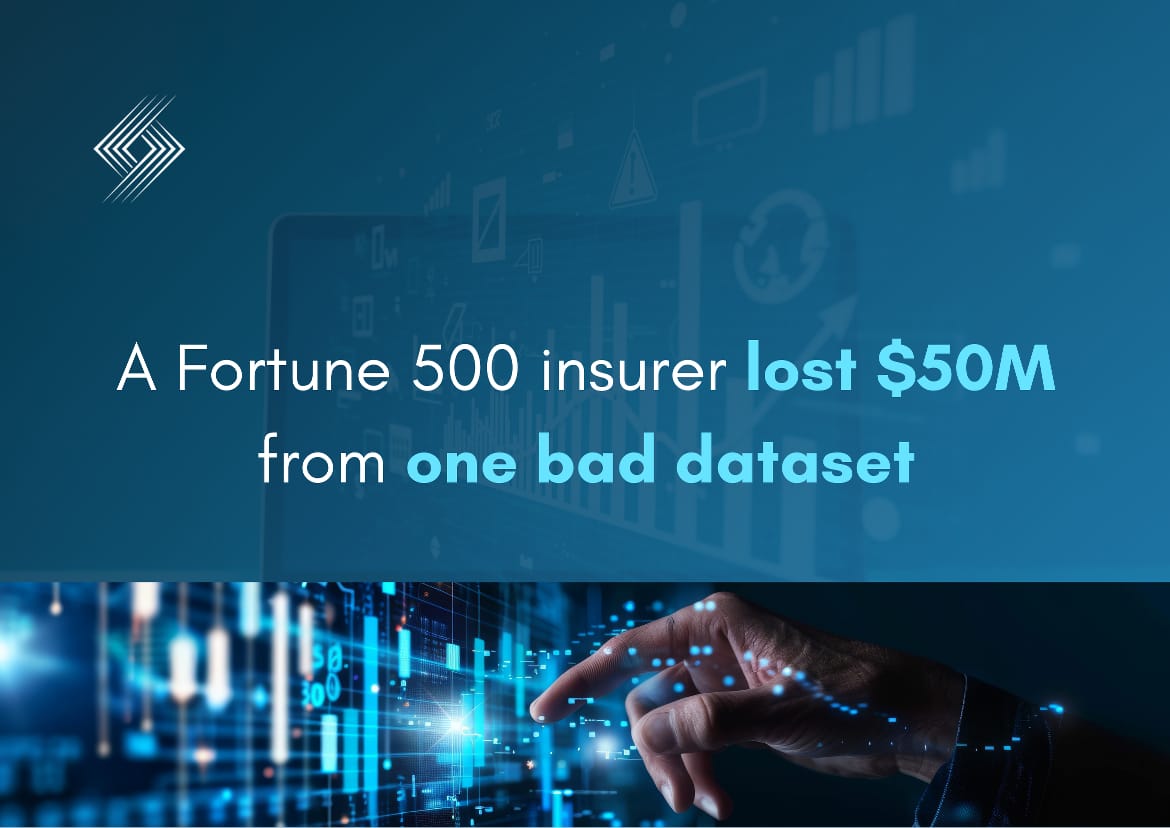
In the modern financial landscape, data is often called “the new oil,” but as one Fortune 500 insurer discovered, contaminated data can lead to an expensive explosion. The firm recently incurred a staggering $50 million loss-not through a cyberattack or a market crash, but through the silent infiltration of a single corrupted dataset into their core decision-making engines.
The Incident: Anatomy of an Algorithmic Failure
Insurance is fundamentally a business of predictive accuracy. The firm relied on this specific dataset for its most sensitive operations: underwriting, risk modeling, and premium pricing. When a dataset containing incomplete and erroneous variables was integrated, it created a “garbage in, garbage out” cycle that led to:
- Premium Misalignment: Policies were priced significantly below their actual risk value, leading to a massive deficit in the premium-to-claim ratio.
- Systemic Underestimation of Risk Exposure: The insurer unknowingly took on high-risk profiles without the necessary capital reserves to back them.
- Claims Processing Malfunctions: Automated workflows mismanaged payouts, leading to both overpayment and unnecessary litigation.
Beyond the immediate $50 million balance-sheet impact, the firm faced heightened regulatory scrutiny and a logistical nightmare in re-evaluating thousands of active policies.
The Intelligence Gained: Institutional Takeaways
This failure served as a catalyst for a total overhaul of the firm’s data architecture. The key takeaways for any large-scale enterprise include:
- Data Quality as a Non-Negotiable Metric: Integrity is not a “bonus” feature; it is the bedrock of solvency. Even a 1% variance in data accuracy can translate to millions in losses at scale.
- Implementation of Automated Validation Gates: Manual audits are no longer sufficient. Organizations must deploy automated data-quality firewalls that quarantine “dirty” data before it hits production environments.
- The Necessity of Cross-Functional Stewardship: Data integrity is not just an IT problem. It requires a “Three Lines of Defense” model involving IT, Finance, and Risk Management to ensure 360-degree oversight.
- Codified Data Governance: Establishing clear data lineage (knowing where data comes from) and ownership (who is responsible for it) is essential for long-term risk mitigation.
The Macro Perspective: Data as Strategic Capital
For global enterprises, data is no longer just an operational byproduct; it is strategic capital. A single flawed dataset can compromise revenue, shatter consumer trust, and trigger non-compliance penalties. To survive in a data-first economy, businesses must transition from viewing data as “information to be stored” to “assets to be protected and verified.”
Concluding Remark
The $50 million loss is a sobering reminder: in the digital age, your algorithms are only as good as the data that feeds them. Accuracy, governance, and proactive observability are the only true safeguards against the high cost of digital error.