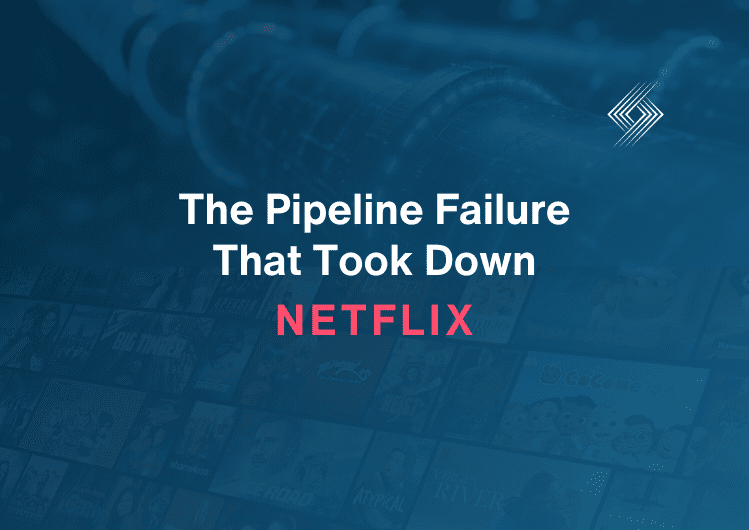
When Netflix Went Dark: How a Broken Pipeline Stopped the World’s Biggest Streamer
The world notices when even the powerful fall. Netflix apparently had an unexpected outage when millions saw nothing but error panels for hours. No movies, no shows, no “Next Episode”, just calm between sections.
The culprit was a malfunction in their content-delivery pipeline—the engine that uploads, encodes, and distributes every title. When it broke, the entire flow collapsed. Content couldn’t be processed, servers couldn’t download data, and streaming ended worldwide.
What Actually Happened?
- Thousands of interconnected microservices power Netflix’s system.
- A single major content pipeline failed and caused a chain reaction.
- Services stopped communicating due to a little update problem.
- Encoding processes halted and content retrieval entirely stalled.
- There was no more new content available for users to access on regional servers.
- In several locations, the platform seemed completely “down.”
- A pipeline outage that stopped Netflix’s whole architecture was the problem, not a server failure.
Why This Matters
Because of its robust design, Netflix can tolerate both hardware problems and increases in traffic.
However, this event demonstrated that everything downstream collapses when the pipeline fails.
No matter how many taps you have, nothing will flow, much like when you turn off the water at the source.
How Netflix Fixed It
- Netflix engineers re-synced content distribution across all regions.
- The unsuccessful content pipeline was rebuilt and restarted.
- The faulty update was promptly undone.
- In order to identify problems early, more robust monitoring systems were introduced.
- To avoid such failures, CI/CD protections were strengthened.
- Automatic rollback procedures were strengthened for faster recovery.
- The platform was back up and running in a matter of hours, with greater speed, stability, and resilience.
The Lesson Behind the Outage
A little error can generate tremendous global consequences.
Testing and rollback strategies are not optional—they’re critical.
Your pipelines affect the quality of everything your consumers encounter, whether you’re running corporate software, an e-commerce app, or a streaming platform.
Conclusion
Even global companies like Netflix aren’t immune to technical setbacks. What sets them different is how rapidly they respond, learn, and strengthen their systems.
The blackout was more than just an outage; it served as a model for improved engineering procedures in the tech industry.