The Vision vs. The Reality
The Data Fabric architecture emerged as the definitive solution for the modern enterprise-a promise to weave together disparate data sources into a cohesive, intelligent, and governed ecosystem. By abstracting the complexity of data movement, a successful fabric should theoretically offer:
- Universal Semantic Layer: A single, unified view of data regardless of its physical location.
- Accelerated Time-to-Insight: Streamlined pipelines that move data from source to dashboard in near real-time.
- Operational Agility: The ability to scale and pivot data strategies without re-architecting the entire backend.
- Automated Governance: Built-in compliance and policy enforcement that travels with the data.
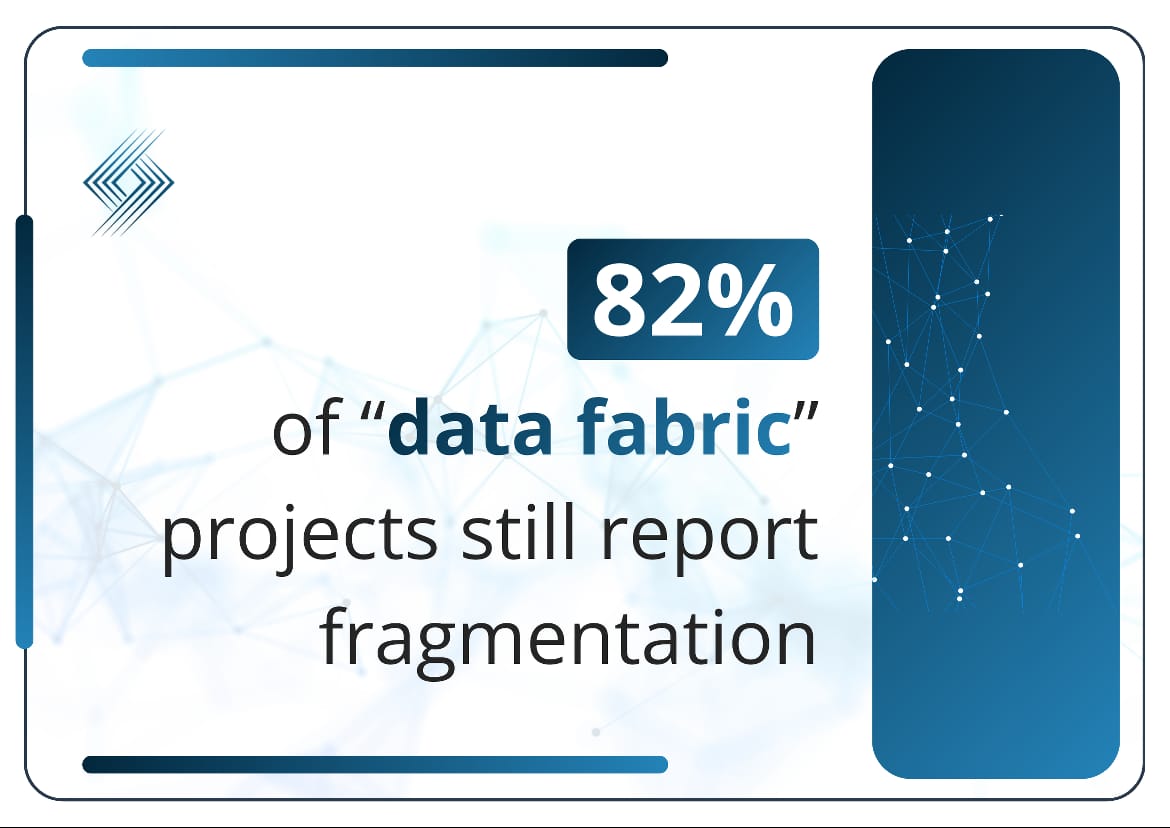
However, the reality is stark: 82% of organizations still report significant fragmentation. The “fabric” is often more a patchwork of disconnected tools than a seamless tapestry.
The Friction Points: Why Fragmentation Persists
Despite the high adoption rates of Data Fabric tools, four primary barriers prevent true unification:
- Architectural Heterogeneity: Modern enterprises are a mix of legacy on-premise systems, multi-cloud environments, and SaaS applications. Orchestrating these without introducing latency or security gaps is an immense technical hurdle.
- The Governance Gap: Technology cannot fix a lack of policy. Without centralized metadata management and clearly defined ownership, the “fabric” simply becomes a faster way to create more silos.
- Scalability and Tooling Immaturity: Many first-generation tools struggle with high–velocitydatastreams or lack the interoperability needed to connect with niche industry-specific databases.
- The Cultural “Silo” Mentality: A common pitfall is treating Data Fabric as a “plug-and-play” IT project. Without shifting the organizational culture toward data democratization and collaboration, departments will continue to hoard data in private silos.
Strategic Roadmap: Moving Beyond the 82%
To bridge the gap between hype and value, organizations must pivot from a tool-centric approach to an outcome-oriented strategy:
- Evolutionary, Not Revolutionary: Stop attempting “big bang” unifications. Prioritize the integration of high-value datasets that drive the most critical business decisions first.
- Formalize Data Stewardship: Data Fabric requires human oversight. Invest in Data Stewards who ensure that data quality and governance standards are met at the source.
- Focus on Metadata Orchestration: The true power of a fabric lies in its metadata. Ensure your tools can read, tag, and organize data contextually across the entire enterprise.
- Operational Alignment: Ensure that engineering, risk, and business units are aligned on a shared data taxonomy to prevent linguistic and structural fragmentation.
Concluding Remark
The 82% fragmentation rate is not a failure of the Data Fabric concept, but a warning against underestimating the complexity of integration. The secret to a successful data strategy is not just adopting the latest architectural trend-it is the disciplined application of governance, culture, and strategic planning.